I made ink from black walnuts
Well, I learned why they call the North American Black Walnut, juglans nigra, a black walnut. The juglans turns black. I'm sure this is obvious to anyone who ever played with them, or cut a walnut tree down or something. But that juglans chemical is useful for making ink.
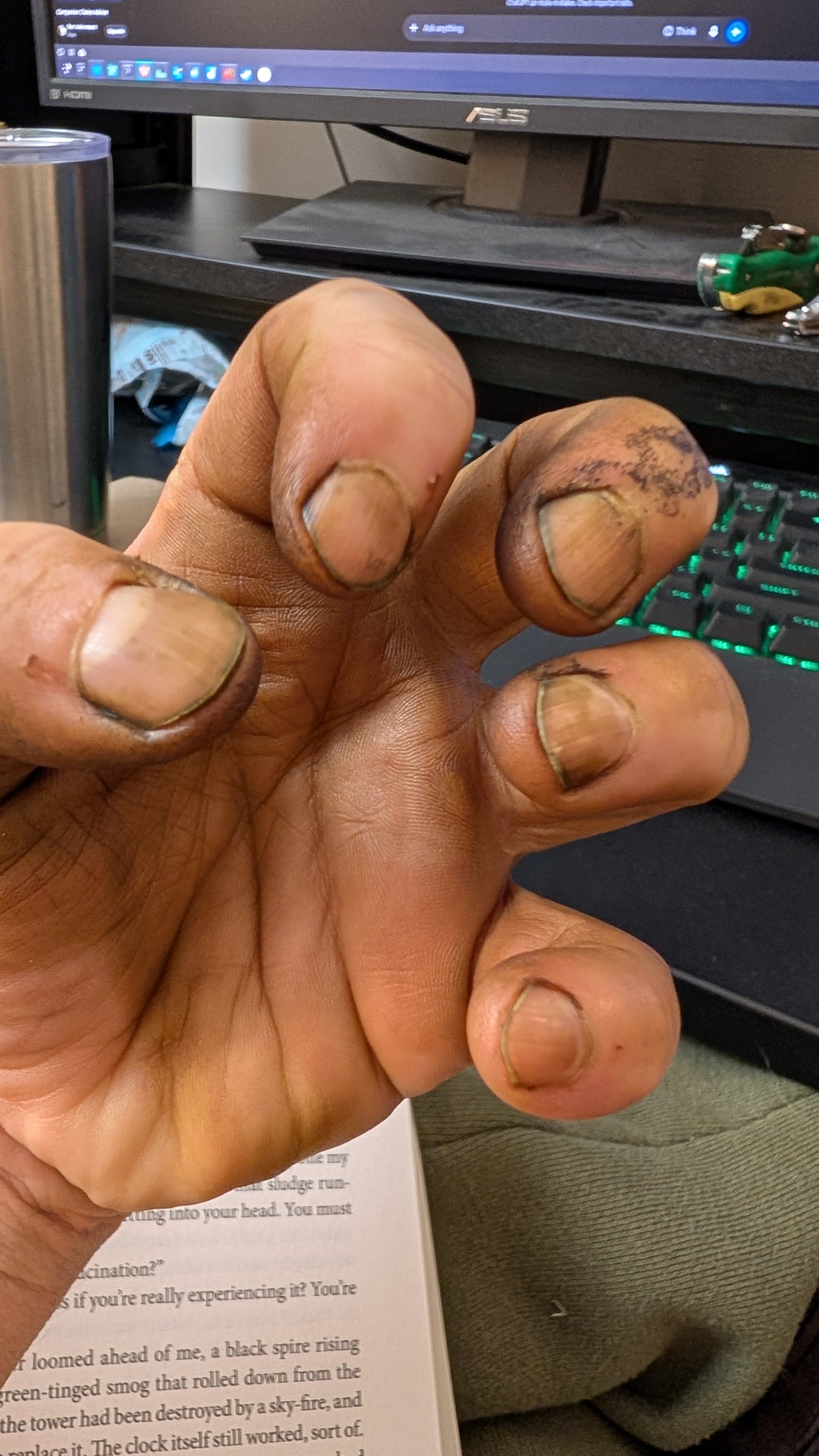
I harvested/collected walnuts from near where I work around Agust 29th, 2026. I collected a second set from the park down the road from me. I just picked em right off the tree. I tried to get the green ones. I then took a hack saw and just cut the hulls off and put them into a quart jar and let them sit in water for 2-3 weeks. I did not where gloves the first time. That was a mistake. I had brownish green hands for a week. My thumb nail is still stained, actually all my finger nails, are still stained a month later. I even wore gloves for the third batch and it still stained my thumb.
As an extra experiment, I added an old rusty nail to the second batch. I figured the iron would make the mixture darker. Classically, iron-oak gall ink is a dark purple-ish black. I was hoping that the tannins in the walnuts + the juglans would bond with the iron and make an iron tannic acid. I don't think a single nail was anywhere near enough to make a difference. I have a different experiment running to see if we can make any difference with iron using vinegar and paper clips.
After they say for about 2-3 weeks I cooked down the slurry over a home brew propane burner. I used a cheap little sauce pan I got at Big Lots. Before reducing I ran the slurry(s) through paper towels as initial filters to get all the fines out, then coffee filters. After reducing (it was just guessing when it looked good enough) I transferred the reduced ink to small jars where I filtered them 2-3 times. I let them sit for another week.
Now, on September 29th, 2026, I reduced down my second batch, to about 14 ml. That's how much would fit in the little Windsor & Newton jar I sacrificed for this project.
The results?
It works. It's not great, but it does work. It doesn't run like the Windsor & Newton Ultramarine ink I sacrificed. I could never use that stuff it ran so badly. I didn't actually add anything to this, aside from the nail I mentioned above, and a little bit of 91% isopropyl to hopefully keep the mold away. Batch #1, before I tried to reduce it, where it cracked in hte boiling water, did have some mold on the surface. I filtered both batched through a last coffee filter, but alas, not I won't know if it mattered.
I haven't added any gum arabic to the walnut ink. It's not very opaque, but it doesn't run. The consistency is actually pretty decent. The dry time isn't great, but it's mostly water. I don't know if that will change with time if the ink will settle in the jar. It does seem to dry kind of shiny, which is stange. Every time I filtered it there was a sheen of oil on the top. I've seen this on the top of the India Inks I have (black and sepia). I don't see that on/in the Windsor & Newton Sepia Calligraphy Ink (acrylic), but it also smells like Army Painter Speed Paint (glycerin? glycol?).
I did three tests to find out how the walnut ink performs. I used my #56 nib, which is a nib I used a lot. I first used India Ink in black, W&N Sepia acrylic ink, and then the walnut ink. You'll notice they get progressively lighter.
I wrote a silly sentence that covers all the letters in the alphabet (we need a better germanic word than alphabet - letter-hoard?); a line with two hashes; a vertical line, a horizontal line, and a diagonal line together; a figure 8 and 3 dots above it; and a cube with some hatching.
Update!
2026-09-30I have progressed in the process of my third batch. The paper clips, and one screw, have been sitting in vinegar for ~2 weeks now. I've opened the little jar a few times to a little 'psst' fizz, so something was happening. I transferred over the liquid to a new jar, then removed all the old walnut hulls. I then shucked 5 newly gathered walnut hulls (from this morning) and put them into the jar, along with the [vinegar + paper clips] and walnut slurry. I left some head room in the jar and shook that thing good, removing the lid a few times and blowing on the mixture. The first time a mist arose from it. It definitely smells of vinegar. I did this another ~3 times. I noticed the color went from a medium brown (something like an umber) to a darker grey, almost black. That was interesting. That's a change I hadn't seen before. That's kind of exciting.
I fully acknowledge the unfortunate downside of my experimentation. I don't actually know what caused the darkening. Was it the extra oxygen and the shaking, agitating, mixing oxygen in? Was it the addition of the iron from the (hopefully) iron acetate from the vinegar with paper clips steeping in it? It could be iron acetate bonding with the tannins in the walnut slurry + the juglans. It could be an oxidation of the solid particulates, much like the hulls that sit out post steeping. I've noticed the oxidation process occurs pretty quickly. Between the time of shucking and throwing the hulls into the jar, the pithy flesh of the hulls (if not already oxidized) will got from a tannish white, to a light brown. They don't really turn black in the jar (though this time they did after the agitation). They usually come out still kind of greenish brown. But the refuse I remove from the jar, and throw in a pile, it turns black by the next morning.
Hence, I can't really say what the actual cause of the darkening is. Either way, I'm pleased.
Black hands
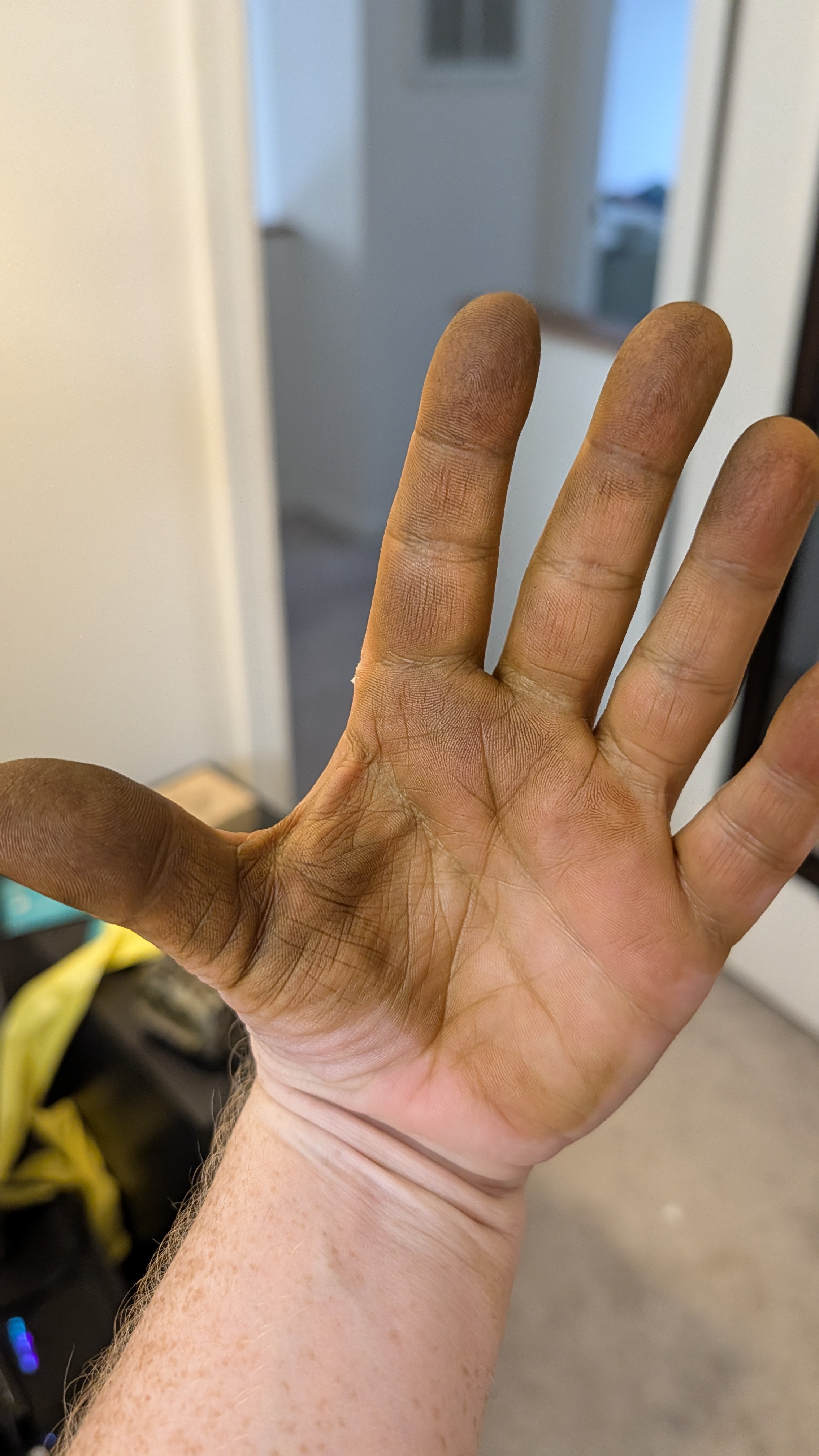
I didn't wear gloves my first shucking and I found out how strong that juglans dye can be
Black Thumb
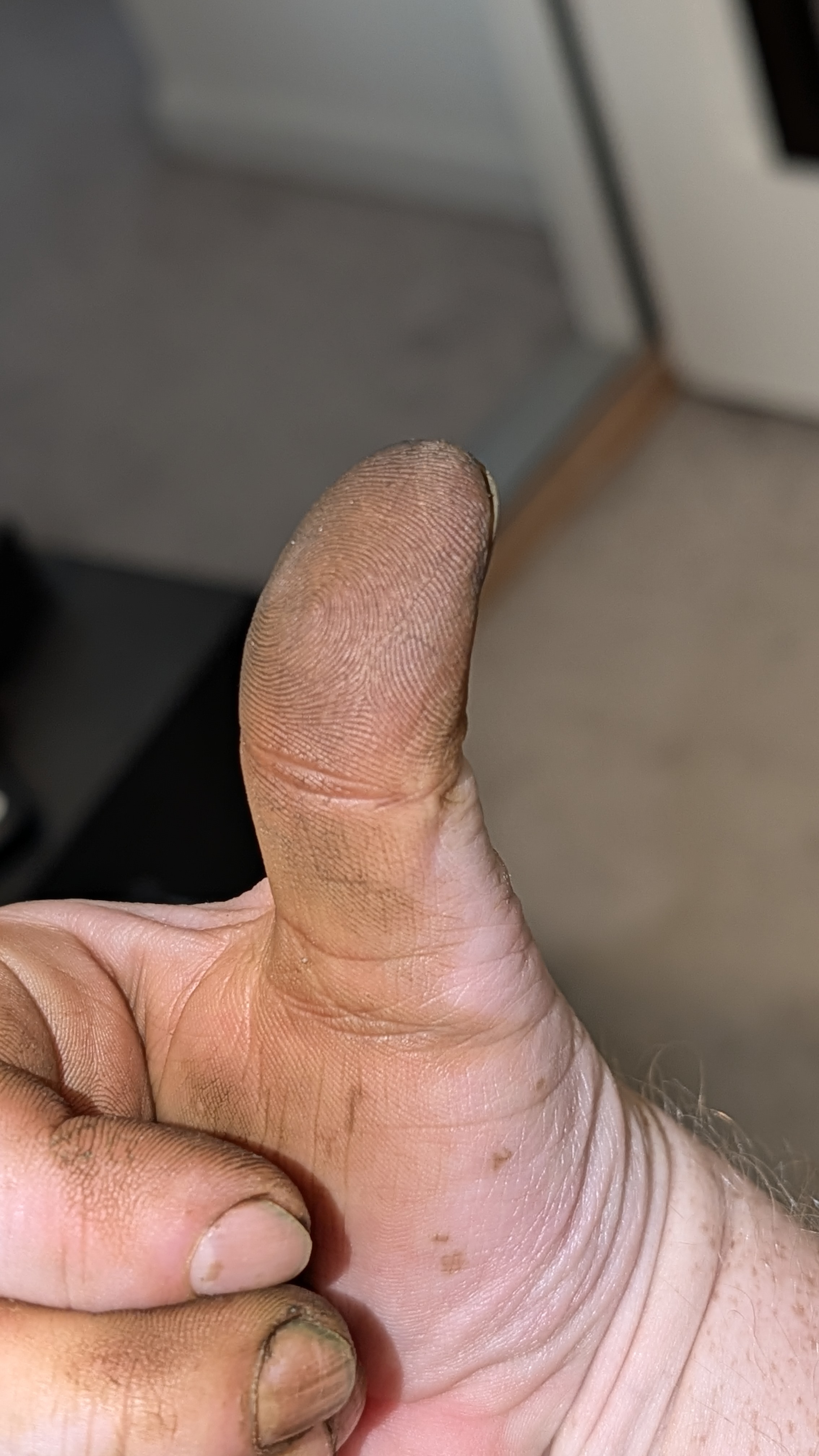
There's a reason they call me Ole Black Thumb
Walnut hull larvae
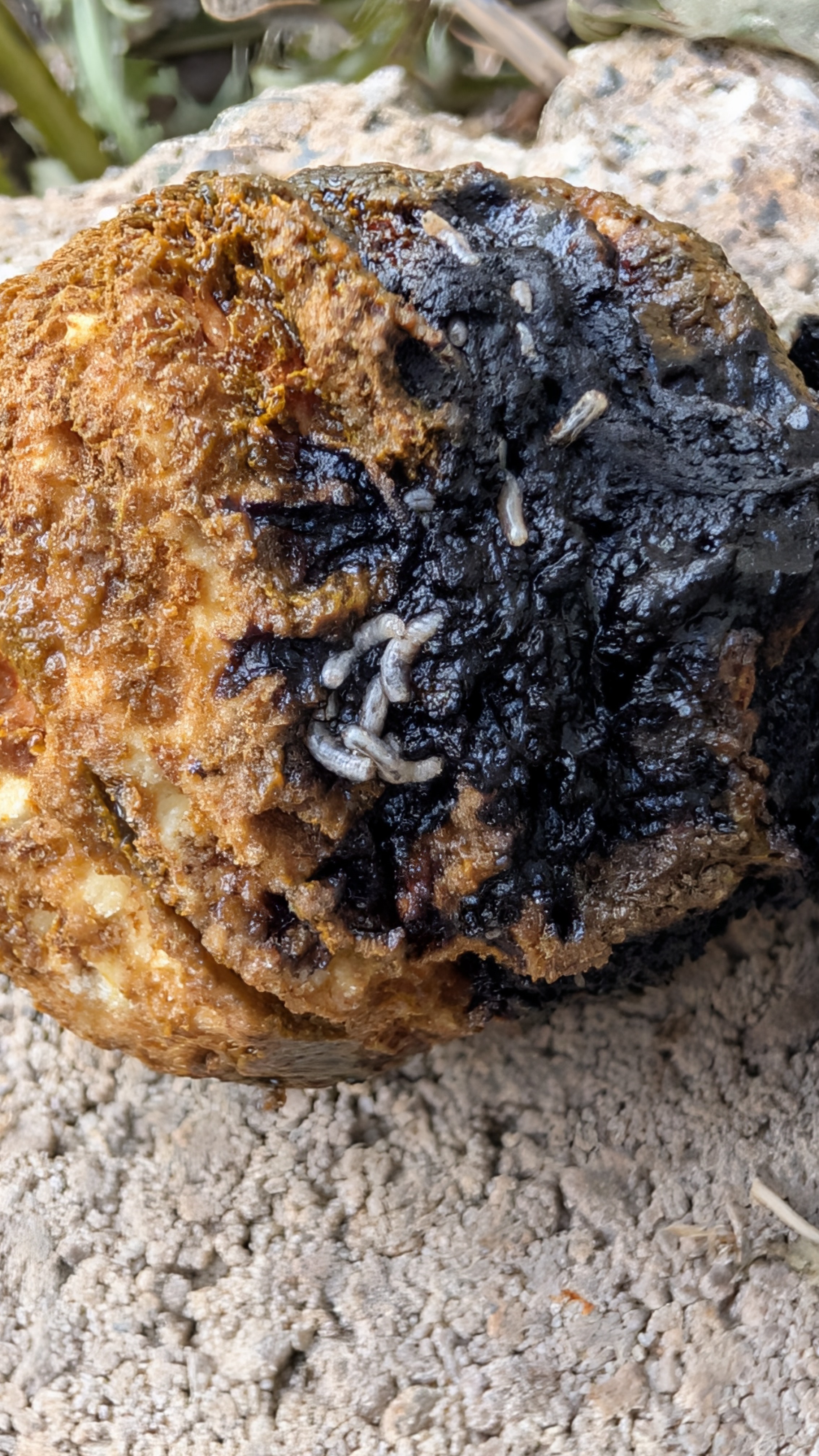
One of the walnuts I picked up for the second batch was full of these little guys. They got mashed in there.
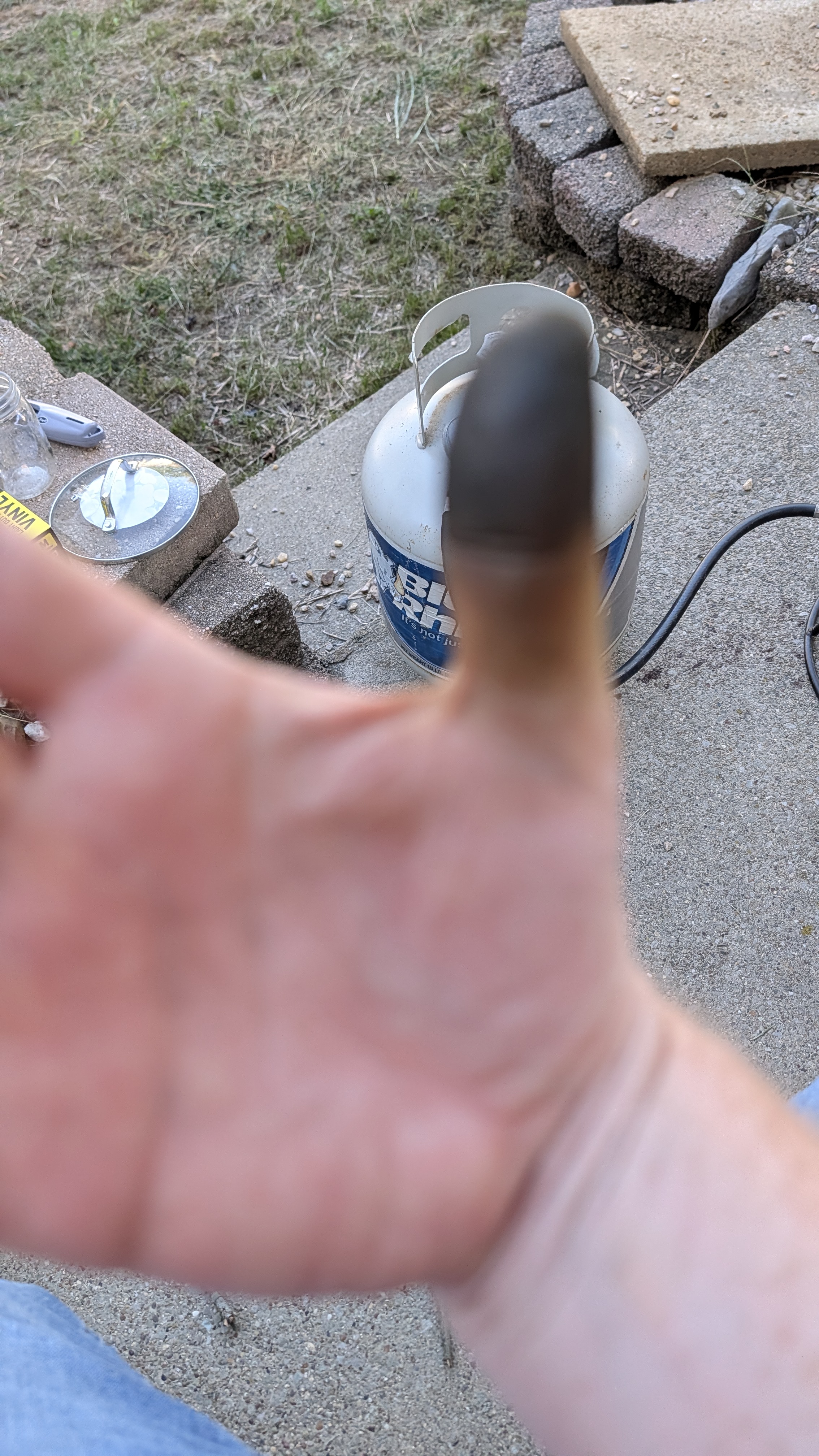
New nail polish
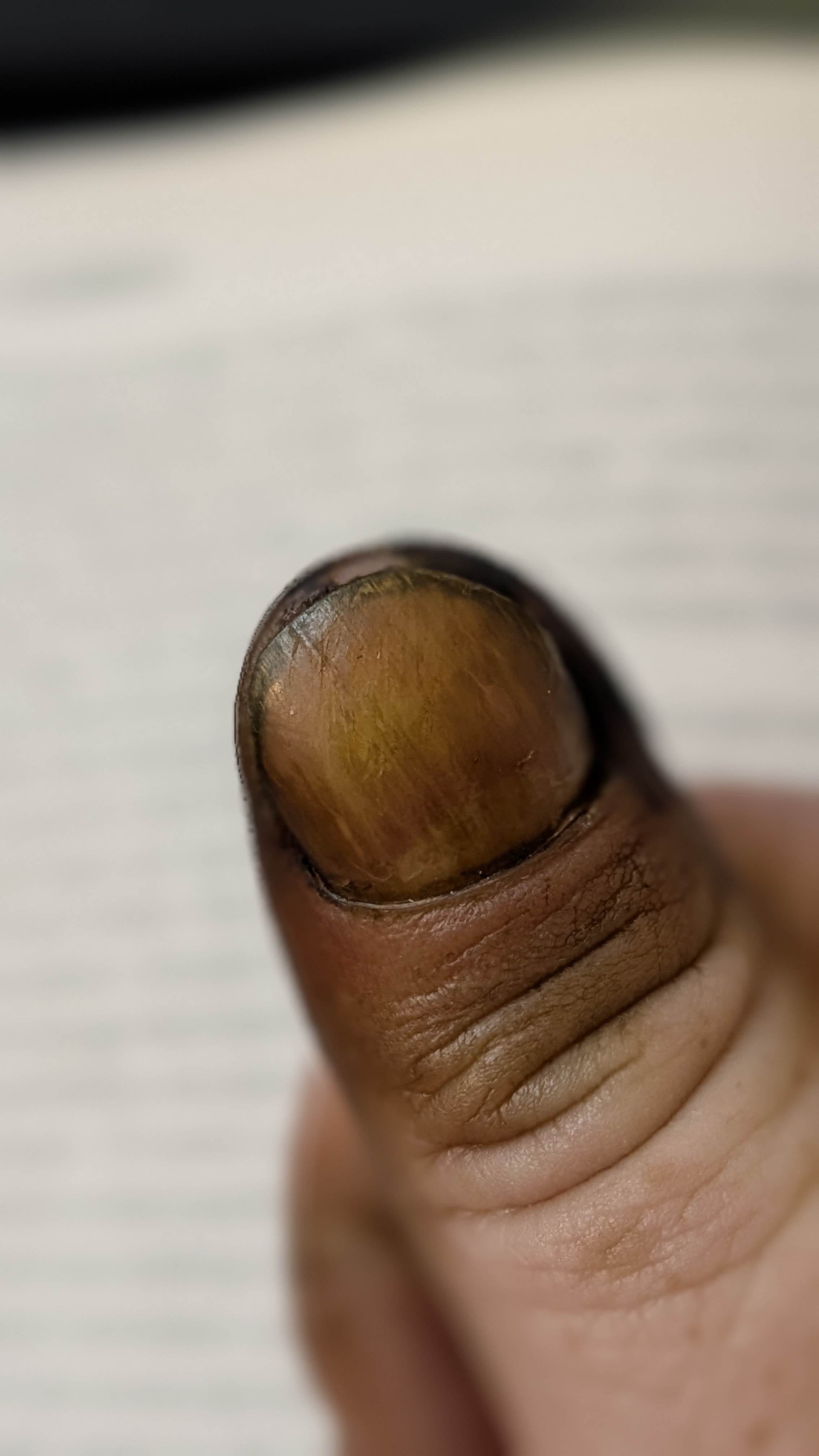
Potent stuff
Jars steeping and straining
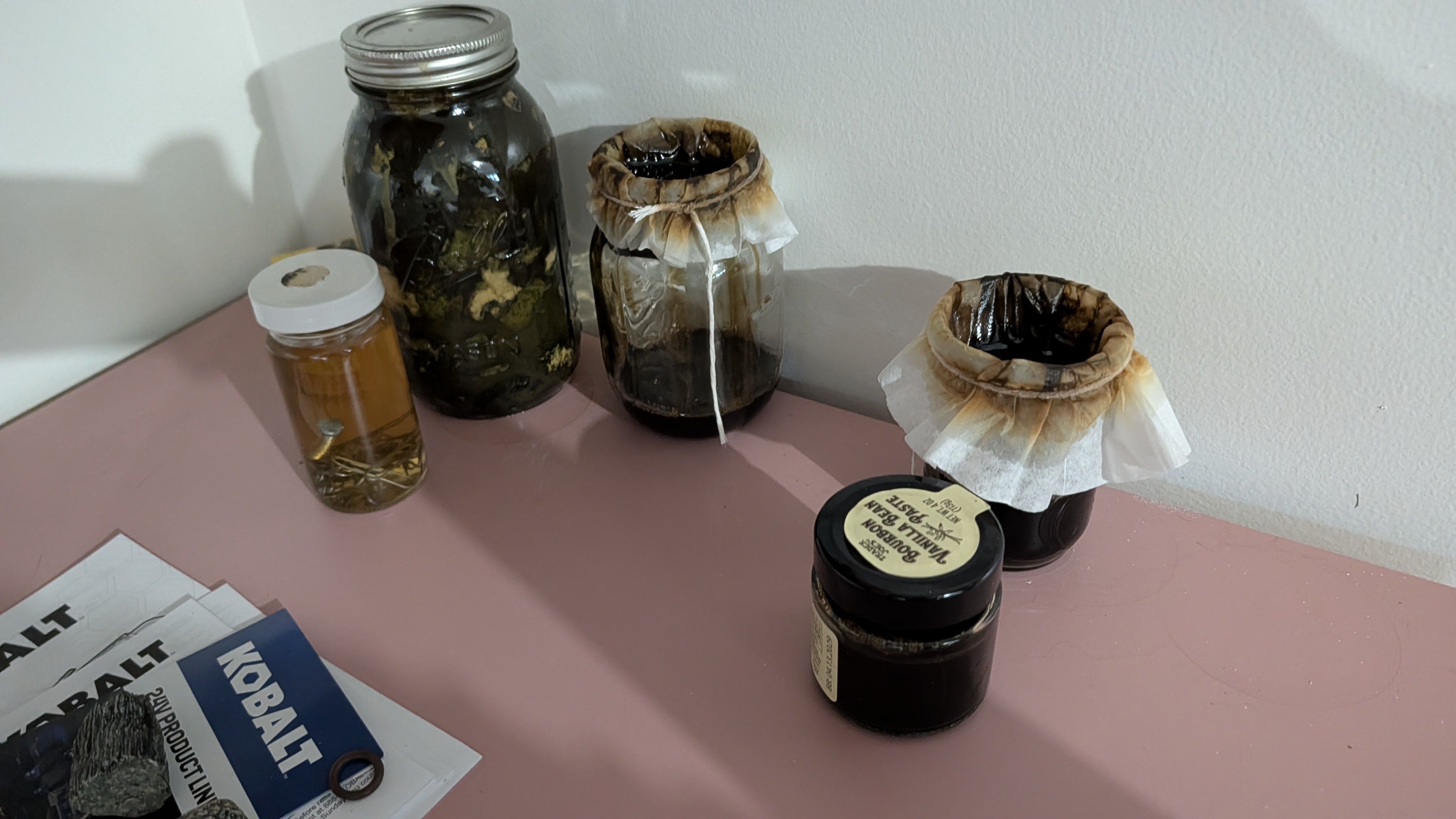
The walnut ink was filtered through coffee filters. In the back is batch #3 and paper clips in vinegar.
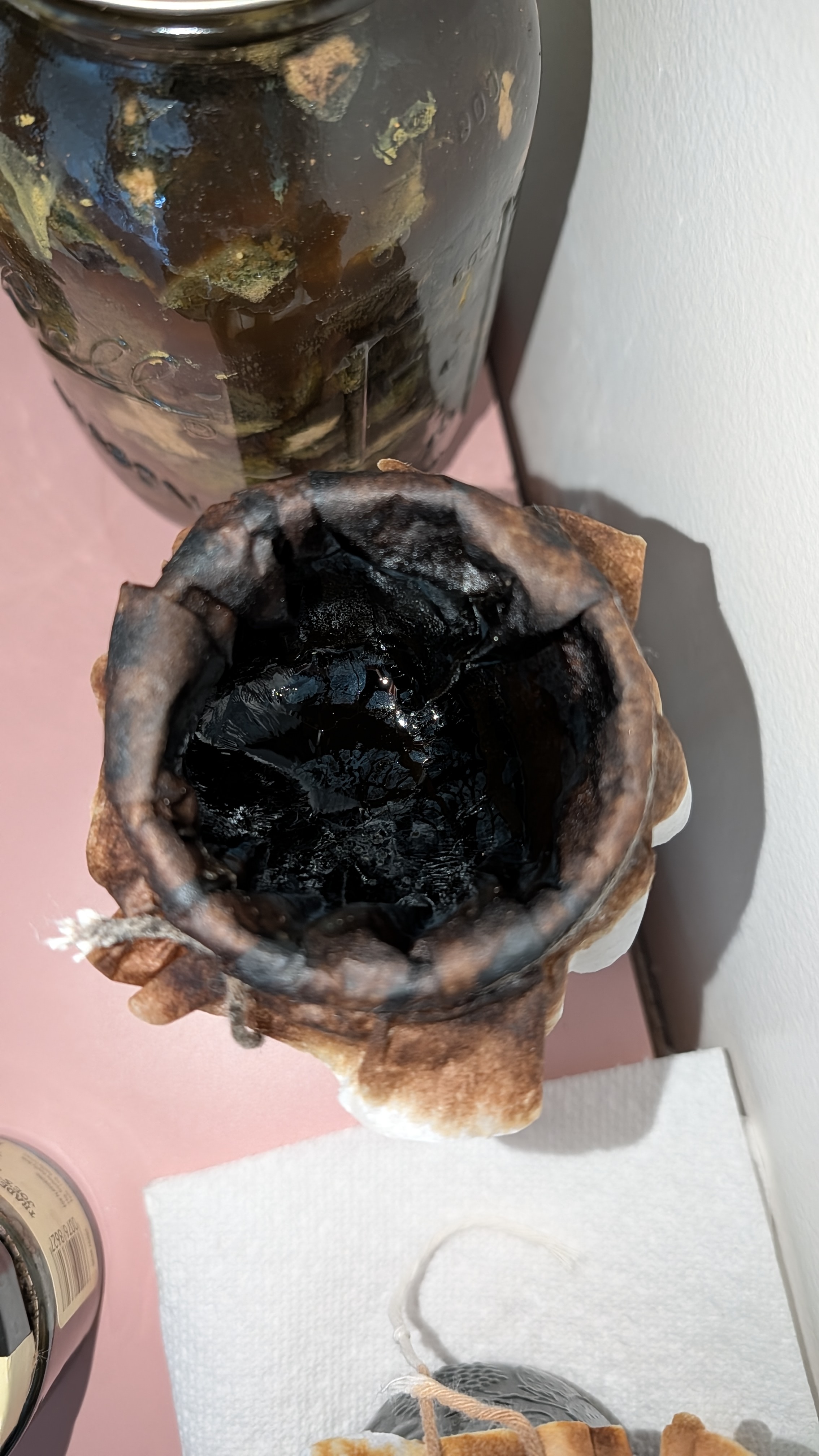
Final product in jar 1
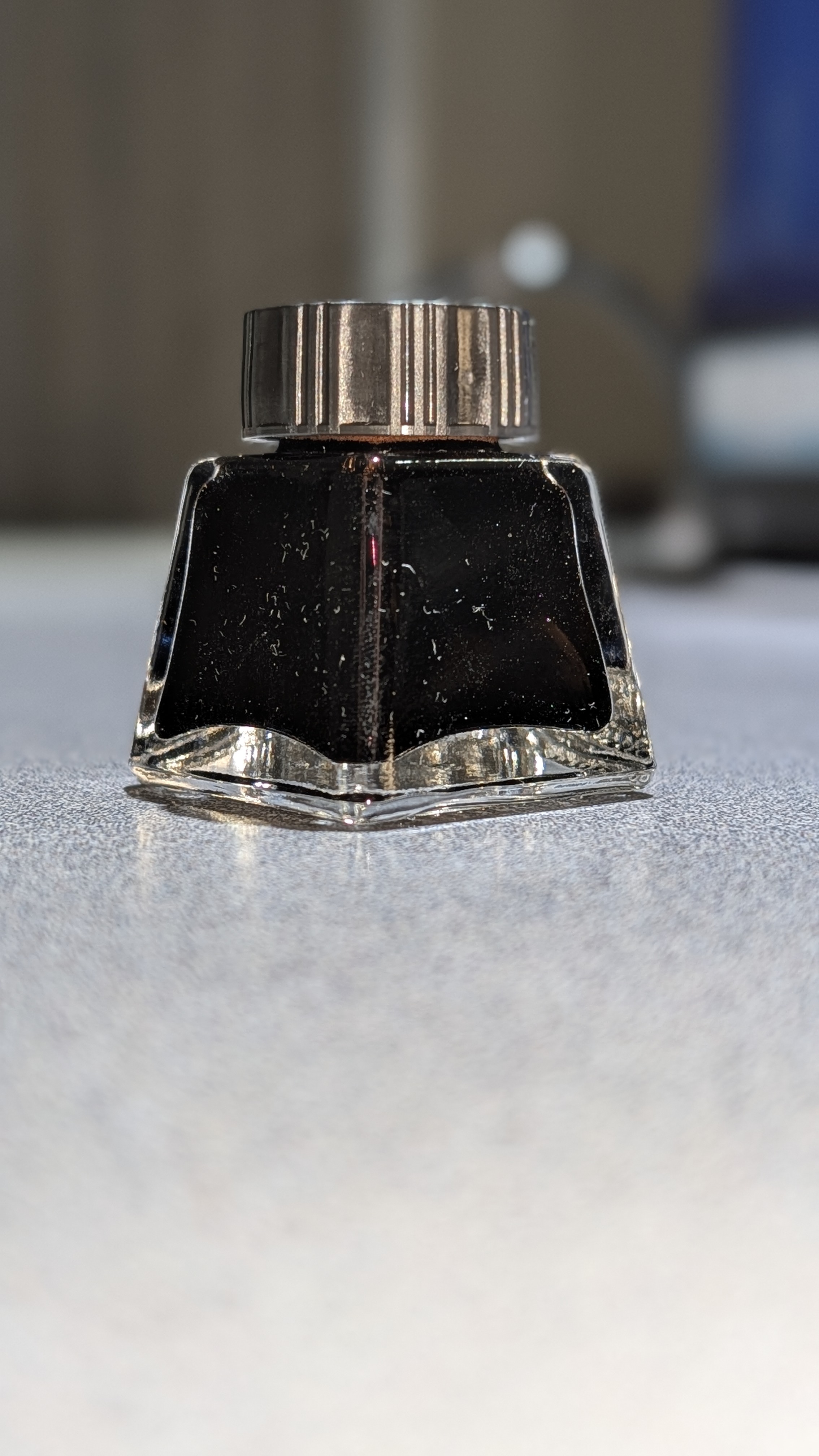
The final product
Final product in jar against the light
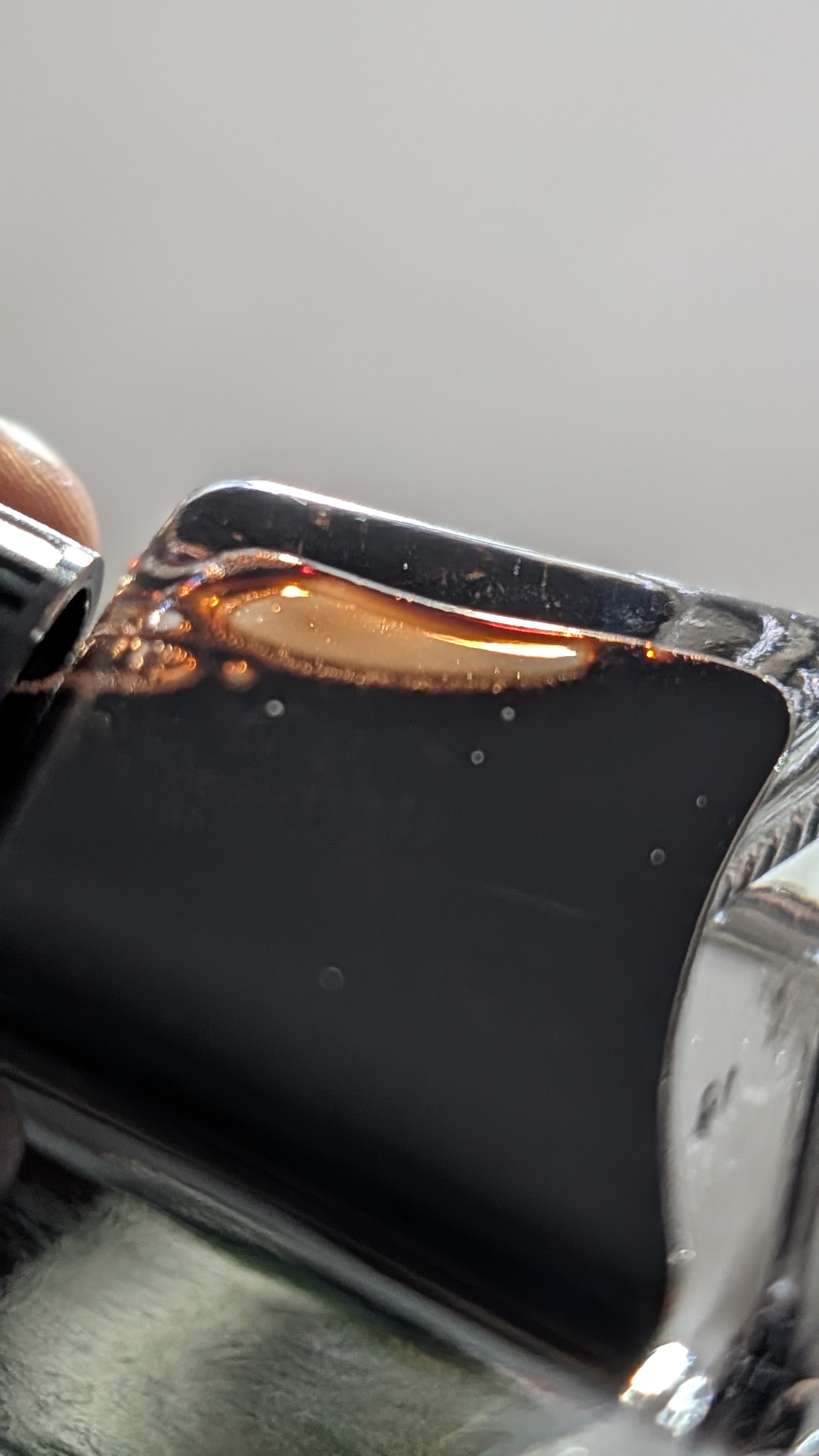
Trying to show a glimpse of the color. It's a deep, warm reddish-brown
Looking into the jar
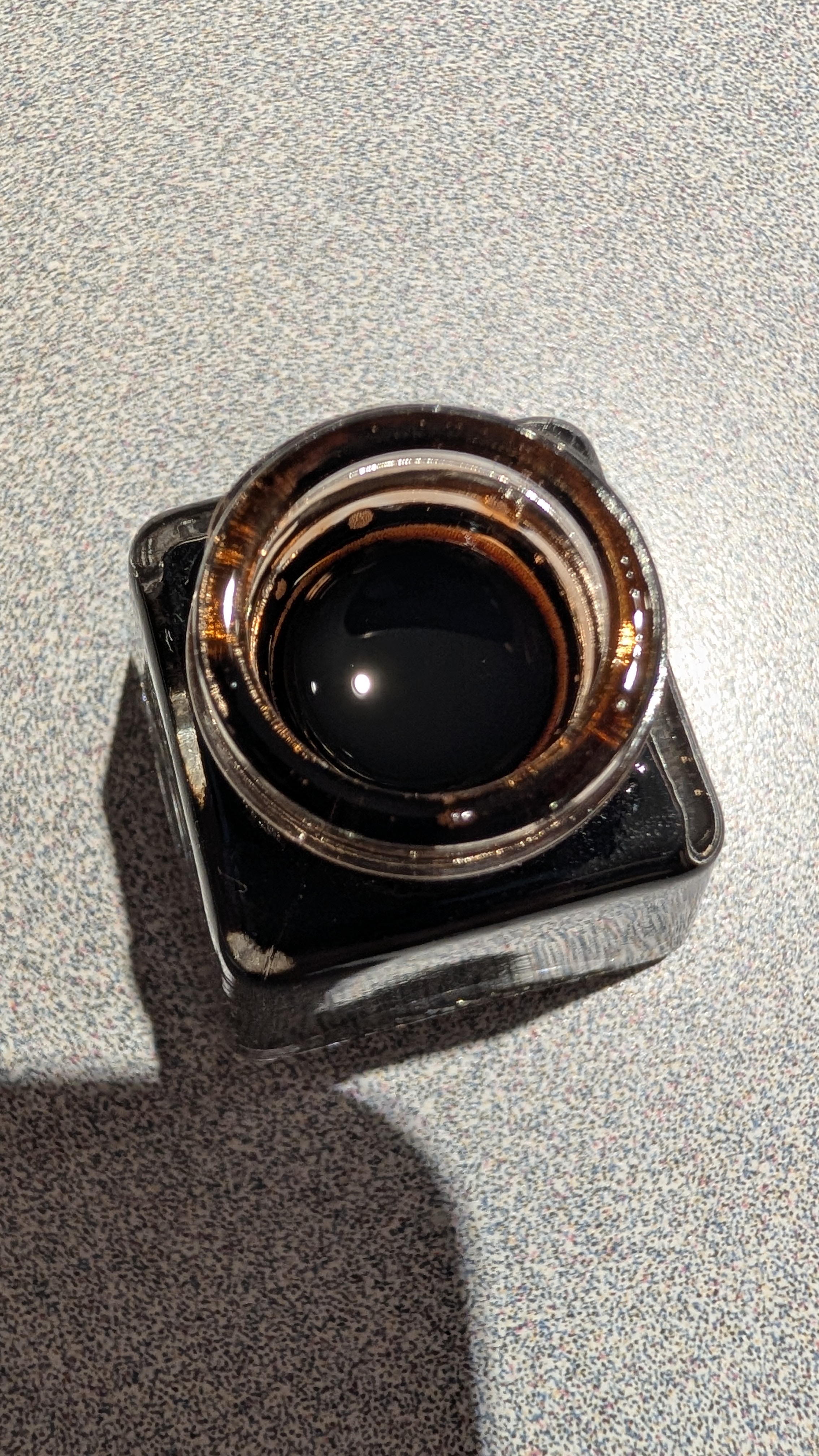
An attempt at looking directly into the ink
A final test on paper
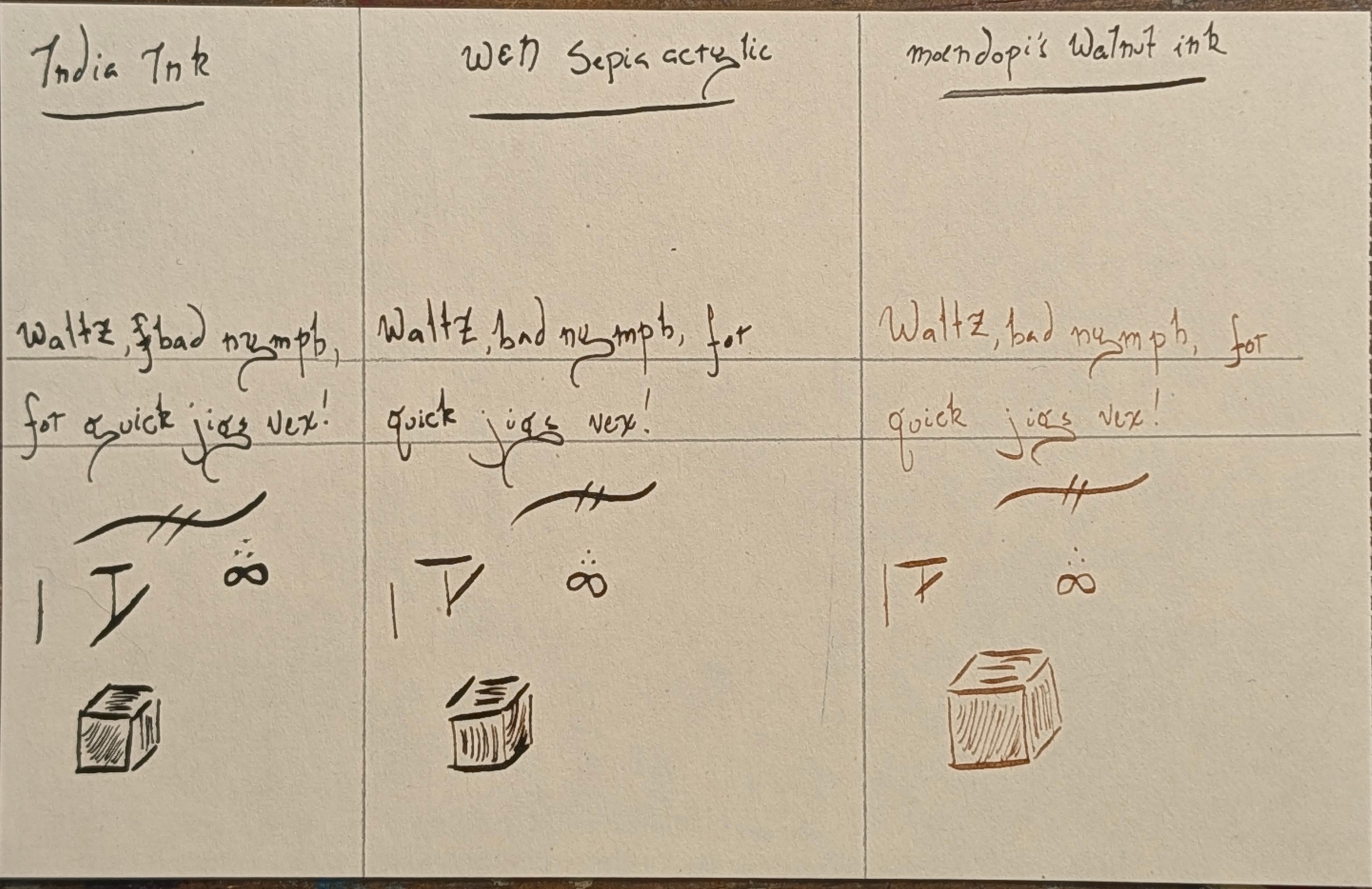
As mentioned above, the paper test